Vital Neuro vs Mendi: Two Very Different Technologies
Vital Neuro uses EEG to read your brainwaves and deliver real-time audio neurofeedback. Here's what that difference means for your results.
The Technology Is Fundamentally Different
This isn't a "which headband is better" comparison. These devices measure completely different things, using completely different science.
Vital Neuro: EEG — Your Brain's Electrical Activity
EEG measures the electrical signals your neurons fire, your actual brainwaves. Different patterns (alpha, beta, theta, delta, gamma) correspond to different mental states: deep focus, calm alertness, sleep onset, meditative awareness, and more.
Vital Neuro reads these patterns 250 times per second and adapts scientifically composed music in real time to guide your brain toward the state you chose. This is closed-loop neurofeedback — the same approach used in clinical neurofeedback for decades.
Because EEG can distinguish between brainwave states, Vital Neuro offers five distinct training modes — Focus, Relax, Sleep, Meditate, and Optimize — each with its own protocol targeting a different brain state.
Why People Choose Vital Neuro
1. Five Training Modes vs. One Exercise
Sleep and focus are fundamentally different brain states governed by different brainwave patterns. Training your brain for sleep requires a different protocol than training for focus or relaxation.
Vital Neuro recognizes this with five distinct modes — each targeting a specific brainwave state. Mendi offers one core exercise (increase prefrontal blood flow) regardless of your goal.
2. Eyes-Free Audio vs. Staring at Your Phone
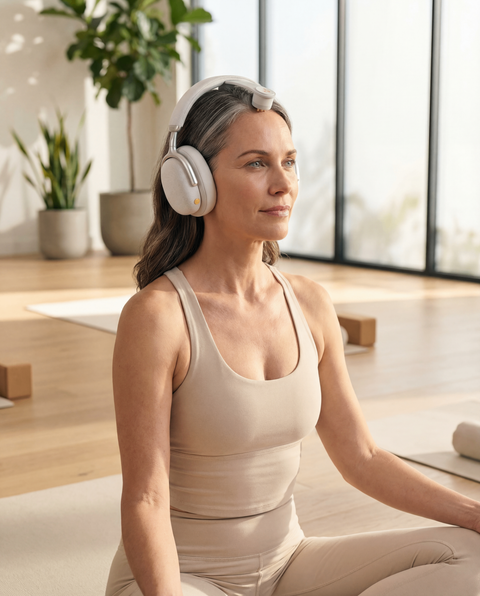
Vital Neuro delivers neurofeedback through adaptive audio in your headphones. Put them on, choose a mode, close your eyes. Use them while commuting, doing dishes, at your desk, or lying in bed. The system works without a screen.
Mendi's session is done watching the app on your phone, where a ball rises and falls with your prefrontal blood flow. That makes it a dedicated, screen-based session rather than something you can do alongside another activity.
3. Millisecond Response vs. Seconds-Level Delay
Neurofeedback effectiveness depends on how fast the reward signal reaches your brain. EEG operates in milliseconds — Vital Neuro processes 250 data points per second, creating a tight, responsive feedback loop.
Blood flow (what Mendi measures) changes on a scale of seconds. It's inherently slower. The delay between your brain doing the right thing and the ball responding is measurably longer. In neurofeedback, speed of feedback directly impacts how well your brain learns.
4. What the Research Measures
EEG-based neurofeedback has been used clinically for over 50 years, with extensive research supporting its effectiveness for anxiety, focus, sleep, and cognitive performance.
Vital Neuro's own six-week case studies show a 47% improvement in focus among 200+ educators, a 49% reduction in stress-related symptoms among 500+ nurses, military personnel and emergency responders, and a 38% improvement in sleep among 150+ caregivers. Full study details and participant counts are on our clinical studies page.
Mendi has two peer-reviewed studies from the University of Victoria confirming the device can measure cognitive load accurately. That's device validation — not outcome validation.
5. Headphones vs. Forehead Band
Vital Neuro is a pair of headphones, so a session can happen anywhere you would normally wear them. Mendi is a band worn across the forehead, paired with the phone app, so sessions are set aside as their own activity.
6. Trusted by Healthcare Professionals
Vital Neuro is deployed in hospitals, healthcare facilities, corporate wellness programs, coaching practices, and veterans' services. Clinicians who understand neurofeedback choose it because it uses the same evidence-based approach they use in clinical practice.
Mendi is sold as a consumer wellness product.
Side by Side
| Vital Neuro | Mendi | |
|---|---|---|
| Technology | EEG (brainwave patterns) | fNIRS (blood flow in one region) |
| Response Speed | Milliseconds (250 reads/sec) | Seconds |
| Feedback | Real-time adaptive audio (eyes-free) | Visual ball game (screen required) |
| Training Modes | Focus, Relax, Sleep, Meditate, Optimize | One mode (increase PFC blood flow) |
| Brain Coverage | Multiple cortical regions | Prefrontal cortex only |
| Clinical Evidence | 47% focus, 49% stress-related symptoms, 38% sleep (six-week case studies) | 2 device accuracy studies; no outcome trials |
| Form Factor | Headphones | Forehead band |
What Vital Neuro Users Experience
★★★★★ Rated 4.9 / 5 by App Store verified customers, as of October 2026.
"The first home unit that I have used that actually works well."
— Neurofeedback provider
"After my first session I noticed a difference that night. I was able to fall asleep after 10-15 minutes."
— Vital Neuro user
Where Mendi Might Fit
Mendi has no subscription fee, which suits people who want a one-time purchase. It is a different technology with a narrower scope: one training exercise, one brain region, and a session spent watching the app.
If you want a session that adapts to your brain state as it happens, that requires reading brain activity in real time — which is what Vital Neuro is built to do.
Clinical-Grade Neurofeedback, Without the Clinical Price Tag
Traditional clinical neurofeedback costs $150–$250 per session. A full treatment protocol runs $6,000–$10,000. It works — but it's accessible to very few people.
The Vital Neuro Essentials Bundle — headphones plus a full year of unlimited sessions across all five modes — costs less than three clinical visits. Same science. Same closed-loop approach. Available anytime, anywhere.
Ready to Train Your Brain?
The Essentials Bundle includes Vital Neuro headphones and a full year of unlimited access to all five session modes.
Shop Essentials BundleQuestions? Contact our team
Related Reading
- Vital Neuro vs Muse: What’s Actually Different? — EEG either way, but one adapts the audio to your brain and one plays soundscapes at it.
- Vital Neuro vs BrainTap: Neurofeedback or Brainwave Entrainment? — One session listens to your brain, the other plays a fixed programme.
- Best Neurofeedback Devices for Home Use in 2026 — How seven consumer devices compare on technology, feedback and evidence.
Vital Neuro is a general wellness device for relaxation, focus and stress management. It is not a medical device and is not intended to diagnose, treat, cure or prevent any disease.
Information about Mendi in this article is drawn from Mendi's own publicly available product descriptions and published research, and reflects those as of October 2026. Product features change over time; please check the manufacturer's own site for current information. Mendi is a trademark of its respective owner and is referred to here for identification and comparison only.